
From 1 November 2026, the physical check that's quietly kept New Zealand's cars safe — and kept a generation of local garages in business — gets stretched further apart than it's ever been. Here's what's actually changing, why, and what to do about it.
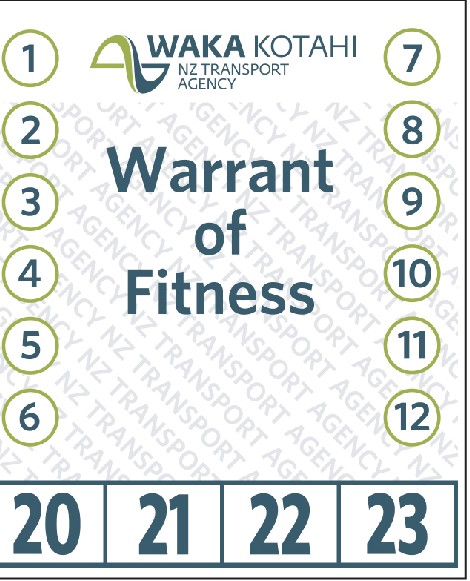
The actual label. Every Kiwi knows it on sight.
Twelve little circles for the month, four numbers for the year, a line in small print telling you to check your tyres, wipers and lights. It's lived in the corner of New Zealand windscreens for longer than most of us have been driving — proof, right there in plastic, that someone qualified has actually looked underneath your car recently.
From November, for a lot of vehicles, that someone looks a lot less often.
That's a curveball for two different people at once. For a driver, the yearly check has quietly been the actual safety net — not the sticker itself, but the mechanic finding the worn pad or the bald tyre before it finds you on the motorway. Stretch the gap and the net gets bigger holes. For the workshop down the road, WOF day was never just about the sticker either — it's the one guaranteed reason a customer walks in every year, the moment they catch the oil leak, quote the cambelt, keep the relationship alive. Halve how often that happens and you've halved a business model that's worked for decades.
New cars, cars 4–14 years old, cars 14–26 years old, cars over 26 — four different age groups, two different phase-in dates, one very fair question: what does this actually mean for the car in your driveway? Enter your rego year below and find out.
No plate, no lookup fee — just the year your vehicle was first registered.
Indicative only, based on NZTA's published rule changes and the AA's explainer. Confirm your exact date at nzta.govt.nz.
The government's case is straightforward: modelling suggests billions saved over 30 years, mostly on checks that weren't finding anything. The Motor Trade Association isn't convinced — and their members carry out roughly four in five WoFs in this country, so their view carries real weight.
$2.6–4.1 billion modelled net benefit over 30 years. Most of that saving comes from not paying for checks on vehicles that were passing anyway — time and money back in owners' pockets.
"The saving of one less WoF a year is around $70," says the MTA's head of advocacy — against bigger repair bills later for faults that go unnoticed for longer. Their own numbers: one in three vehicles aged 8–10 already shows a safety issue at the current, more frequent check.
Both can be true at once. Fewer inspections probably does save money in aggregate. It probably also means more variation in vehicle condition on the road at any given time. Worth knowing where your own vehicle actually lands — which is exactly what the calculator above just told you.

The job of noticing just moved from the system to you. When the check happened every year like clockwork, it was easy to let the sticker do the remembering. Stretch that to every two years and the same approach means a much longer stretch of silence — exactly when small stuff turns into big stuff. Track your own actual date. Do the checks the old sticker told you to do anyway — tyres, wipers, lights — between visits, not just at them.
 Under the bonnet
If WoF day was your reliable trigger to see a customer, that trigger just got quieter — for a huge share of the fleet, it now rings half as often. The workshops that come out ahead won't be the ones waiting for the next mandated check. They'll be the ones with a direct line to the owner that doesn't depend on a government-set interval — service reminders, RUC renewals, the conversation that used to just happen on its own.
Rego, RUC, service history, insurance renewal — every date that comes with owning a vehicle, watched automatically and matched to your car the moment you add it.
Get your vehicle life sorted →